Intro Posts Slider

Showing posts with label BigBooks. Show all posts

BOOK REVIEW: How to Have a Good Day: Harness the Power of Behavioral Science to Transform Your Working Life


How to Have a Good Day: Harness the Power of Behavioral Science to Transform Your Working Life
by Caroline Webb is a book that teaches readers how to apply insights from behavioral economics, psychology, and neuroscience to improve their daily lives.

The book is divided into four parts:

  • Part 1: Understanding Your Brain This part explains how our brains work and how our thoughts and emotions influence our behavior.
  • Part 2: Designing Your Day This part teaches readers how to design their days in a way that maximizes their productivity and well-being.
  • Part 3: Making Better Decisions This part teaches readers how to make better decisions, even in difficult or stressful situations.
  • Part 4: Building Better Habits This part teaches readers how to build good habits and break bad ones.

Webb's writing is clear and concise, and she provides a wealth of practical advice and examples from the real world. She also includes a number of exercises and activities to help readers learn and apply the concepts covered in the book.

Overall, How to Have a Good Day is an excellent book that can help readers improve their daily lives. It is a valuable resource for anyone who wants to be more productive, happier, and healthier.

Here are some additional thoughts on the book:

  • The book is very well-researched and draws on the latest findings from behavioral science.
  • The book is very practical and provides a number of actionable tips that readers can implement immediately.
  • The book is written in a friendly and engaging style.
  • The book is relevant to people of all ages and backgrounds.

If you are looking for a book that can help you improve your daily life, I highly recommend How to Have a Good Day. It is a valuable resource for anyone who wants to be more productive, happier, and healthier.


BOOK REVIEW: Exploring Entrepreneurship Third Edition


Exploring Entrepreneurship Third Edition
by Richard Blundel, Nigel Lockett, Catherine Wang, and Suzanne Mawson is a comprehensive and well-written textbook on entrepreneurship. It is suitable for students at all levels, from undergraduate to postgraduate.

The book is divided into two parts. Part 1 covers the practical activities involved in new entrepreneurial ventures, while Part 2 explores entrepreneurship from different perspectives.

Part 1 is particularly useful for students who are planning to start their own businesses. It covers topics such as:

  • Developing entrepreneurial ideas
  • Creating a business plan
  • Raising finance
  • Marketing and selling products or services
  • Managing a business

Part 2 of the book is more theoretical, but it is still very useful for students who want to understand entrepreneurship in more depth. It covers topics such as:

  • The different types of entrepreneurs and entrepreneurial ventures
  • The entrepreneurial process
  • The entrepreneurial environment
  • The challenges and rewards of entrepreneurship

The book is well-written and easy to read. It is packed with examples and case studies from the real world. It also includes a number of useful exercises and activities to help students learn and apply the concepts covered in the book.

Overall, Exploring Entrepreneurship Third Edition is an excellent textbook on entrepreneurship. It is comprehensive, well-written, and practical. I highly recommend it to students who are interested in learning more about entrepreneurship.

Here are some additional thoughts on the book:

  • The book is very up-to-date and covers all of the latest trends and developments in entrepreneurship.
  • The book is very international in scope and includes examples from a wide range of countries.
  • The book is very well-organized and easy to navigate.
  • The book includes a number of helpful resources, such as a glossary of key terms, a list of further reading, and a website with additional resources.

If you are looking for a comprehensive and well-written textbook on entrepreneurship, I highly recommend Exploring Entrepreneurship Third Edition.


BOOK REVIEW: The book Entrepreneurship: Successfully Launching New Ventures (4th Edition)


The book Entrepreneurship: Successfully Launching New Ventures (4th Edition) by Bruce R. Barringer and Duane Ireland is a comprehensive guide to the entrepreneurial process. It covers everything from ideation and planning to execution and growth.

The book is divided into four parts:

  • Part 1: Introduction to Entrepreneurship: This part introduces the concept of entrepreneurship and discusses the different types of entrepreneurs and ventures.
  • Part 2: The Entrepreneurial Process: This part walks the reader through the different stages of the entrepreneurial process, from ideation and planning to execution and growth.
  • Part 3: Entrepreneurial Resources: This part discusses the different resources that entrepreneurs need to be successful, such as financial resources, human resources, and information resources.
  • Part 4: Special Topics in Entrepreneurship: This part covers some special topics in entrepreneurship, such as social entrepreneurship, international entrepreneurship, and corporate entrepreneurship.

The book is written in a clear and concise style, and it is packed with practical advice and examples from the real world. It is an essential resource for anyone who is thinking about starting their own business.

Here is a summary of the key takeaways from the book:

  • Entrepreneurship is a process. It is not a one-time event. There are many different stages to the entrepreneurial process, and each stage has its own challenges and rewards.
  • Entrepreneurs need to be resourceful. They need to be able to find the resources they need to start and grow their business, even when resources are scarce.
  • Entrepreneurs need to be passionate about their venture. They need to have a strong belief in their product or service, and they need to be willing to put in the hard work necessary to succeed.
  • Entrepreneurs need to be adaptable. The business world is constantly changing, and entrepreneurs need to be able to adapt their strategies accordingly.
If you are thinking about starting your own business, I highly recommend reading Entrepreneurship: Successfully Launching New Ventures (4th Edition). It is a comprehensive and informative guide to the entrepreneurial process

BOOK SUMMARY: SideHustle Millionaire


SideHustle Millionaire: A Guide to Financial Freedom Through Side Business by Tony Whatley is a book that teaches readers how to start and grow a successful side hustle in order to achieve financial freedom.

Whatley defines a side hustle as any business that you start and run in addition to your full-time job. He argues that side hustles are a great way to earn extra money, pursue your passions, and eventually achieve financial freedom.

The book is divided into three parts:

  • Part 1: The Mindset This section covers the importance of having a positive mindset and believing in yourself. Whatley also discusses the importance of setting goals and developing a plan for your side hustle.

  • Part 2: The Business This section covers the basics of starting and running a business. Whatley discusses topics such as choosing a niche, developing a product or service, and marketing your business.

  • Part 3: The Lifestyle This section discusses the benefits of having a side hustle and how to achieve financial freedom. Whatley also shares stories of successful side hustlers who have achieved their financial goals.

Whatley's book is full of practical advice and tips for starting and growing a successful side hustle. He also includes a number of case studies of successful side hustlers.

Here are some of the key takeaways from the book:

  • Anyone can start a side hustle. You don't need any special skills or experience to get started. All you need is a willingness to learn and a desire to succeed.
  • Start small. Don't try to do too much too soon. Start by focusing on one task or activity that you can do well.
  • Be persistent. It takes time and effort to build a successful side hustle. Don't give up if you don't see results immediately.

Whatley also provides a number of specific tips for marketing and growing your side hustle. For example, he recommends using social media, networking with other entrepreneurs, and offering excellent customer service.

Overall, SideHustle Millionaire is a valuable resource for anyone who is interested in starting and growing a successful side hustle. The book is full of practical advice and tips, and it includes a number of case studies of successful side hustlers.

Here are some additional tips for starting and growing a successful side hustle:

  • Choose a side hustle that you are passionate about. This will make it easier to stay motivated and put in the hard work required to succeed.
  • Be realistic about your time and resources. Don't overcommit yourself. Start with a side hustle that you can realistically manage in addition to your full-time job.
  • Don't be afraid to fail. Failure is a part of the entrepreneurial journey. Learn from your mistakes and keep moving forward.

By following these tips, you can increase your chances of success in starting and growing a successful side hustle.


BOOK SUMMARY: 12 Months to $1 Million: How to Pick a Winning Product, Build a Real Business, and Become a Seven-Figure Entrepreneur


12 Months to $1 Million: How to Pick a Winning Product, Build a Real Business, and Become a Seven-Figure Entrepreneur is a book by Ryan Moran that provides entrepreneurs with a step-by-step plan for launching a successful online business and generating $1 million in revenue in their first year of operation.

Moran's book is based on his own experience as a successful entrepreneur. He has launched multiple online businesses that have generated millions of dollars in revenue. In his book, he shares his insights and strategies for picking a winning product, building a real business, and becoming a seven-figure entrepreneur.

The book is divided into three parts:

  • Part 1: The Foundation This section covers the basics of starting an online business, such as choosing a niche, setting up a website, and creating a marketing plan.

  • Part 2: The Launch This section covers the steps involved in launching your online business, such as developing your product, creating a sales funnel, and driving traffic to your website.

  • Part 3: The Growth This section covers how to scale your online business and generate more revenue.

Moran's book is packed with practical tips and advice that can help entrepreneurs of all levels of experience. Here are some of the key takeaways from the book:

  • Choose a niche that you are passionate about and that has a large enough market to support your business.
  • Develop a product that solves a real problem or meets a real need.
  • Create a sales funnel that is designed to convert visitors into customers.
  • Drive traffic to your website through a variety of marketing channels, such as paid advertising, search engine optimization (SEO), and social media marketing.
  • Provide excellent customer service to keep your customers coming back for more.

Moran also provides a number of specific tactics and strategies for increasing sales and revenue. For example, he explains how to write effective sales copy, create compelling product offers, and use upsells and downsells to increase the average order value.

Overall, 12 Months to $1 Million is a valuable resource for entrepreneurs who are serious about launching a successful online business and generating $1 million in revenue in their first year of operation. The book is packed with practical tips and advice that can help entrepreneurs of all levels of experience.

Here are some additional tips for building a successful online business:

  • Be patient and persistent. It takes time and effort to build a successful online business. Don't expect to get rich quick.
  • Be willing to learn and adapt. The online business landscape is constantly changing. Be willing to learn new things and adapt your strategies accordingly.
  • Don't be afraid to fail. Failure is a part of the entrepreneurial journey. Learn from your mistakes and keep moving forward.

By following these tips, you can increase your chances of success in the online business world.


BOOK SUMMARY: 77 Ways To Get More Customers


77 Ways To Get More Customers is a book by Chris Cardell that provides entrepreneurs with a variety of strategies for attracting and retaining customers. The book is divided into three sections:

  • Part 1: The Fundamentals This section covers the basics of customer acquisition, such as understanding your target market, developing a strong value proposition, and creating a customer-centric culture.

  • Part 2: Online Marketing This section covers a variety of online marketing strategies, such as search engine optimization (SEO), social media marketing, and email marketing.

  • Part 3: Offline Marketing This section covers a variety of offline marketing strategies, such as networking, public relations, and direct mail.

Here is a summary of some of the key takeaways from the book:

  • Know your target market. The first step to attracting new customers is to understand who your ideal customer is. Once you know who you are trying to reach, you can tailor your marketing messages and strategies accordingly.
  • Develop a strong value proposition. What makes your business unique and why should customers choose you over your competitors? Your value proposition should be clear, concise, and compelling.
  • Create a customer-centric culture. Your customers should be at the heart of everything you do. Make sure that your employees are focused on providing excellent customer service and that your products and services meet the needs of your customers.
  • Invest in online marketing. Online marketing is a powerful way to reach a large audience of potential customers. Make sure that your website is well-designed and informative, and that you are active on social media.
  • Don't forget about offline marketing. Offline marketing strategies, such as networking and public relations, can still be very effective. Get involved in your community and build relationships with potential customers.

Cardell also provides a number of specific tips and tactics for attracting and retaining customers in each section of the book. For example, in the section on online marketing, he provides tips on how to improve your website's SEO, write effective email marketing campaigns, and use social media to promote your business.

Overall, 77 Ways To Get More Customers is a valuable resource for entrepreneurs who are looking to grow their business and increase their profits. The book provides a comprehensive overview of customer acquisition strategies, and it is packed with practical tips and advice.

Here are some additional tips for getting more customers:

  • Offer excellent customer service. Customer service is essential for any business, but it is especially important for small businesses. Make sure that your customers have a positive experience with your business, from the first time they contact you to the last time they make a purchase.
  • Get involved in your community. Sponsor local events, donate to charity, and get involved in your local Chamber of Commerce. This is a great way to get your business name out there and to meet potential customers.
  • Offer loyalty programs and discounts. Reward your loyal customers with discounts and special offers. This will encourage them to keep coming back to your business.
  • Ask for referrals. Word-of-mouth is still one of the best ways to get new customers. Ask your satisfied customers to refer your business to their friends and family.

By following these tips, you can attract more customers and grow your business.

Book Review: Rich Dad's Guide to Becoming Rich by Robert Kiyosaki


Rich Dad's Guide to Becoming Rich is a book by Robert Kiyosaki, a self-help author and entrepreneur. The book was first published in 1997 and has since become a bestseller, with over 40 million copies sold worldwide.

In the book, Kiyosaki shares his personal experiences and insights on how to achieve financial success. He argues that the rich get richer because they invest in assets that generate income, while the poor and middle class work for money.

Kiyosaki also teaches readers about the importance of financial education and the different types of assets available. He provides practical advice on how to choose assets and build a portfolio.

Rich Dad's Guide to Becoming Rich is a well-written and informative book. Kiyosaki's writing style is clear and engaging, and he does a good job of explaining complex financial concepts in a way that is easy to understand.

Here are some of the things I liked most about the book:

  • Kiyosaki's advice is practical and easy to follow.
  • He provides a good overview of the different types of assets available.
  • He emphasizes the importance of financial education.
  • The book is well-written and engaging.

Here are a few things I didn't like as much:

  • Some of Kiyosaki's advice is quite risky.
  • He can be a bit repetitive at times.
  • He does not spend a lot of time discussing the risks of investing.

Overall, I would recommend Rich Dad's Guide to Becoming Rich to anyone who is interested in learning more about personal finance and investing. It is a well-written and informative book that provides readers with the knowledge and skills they need to start building wealth.

However, it is important to note that Kiyosaki's advice is not for everyone. Some of his advice is quite risky, and it may not be suitable for people who are not comfortable with risk. It is also important to do your own research and consult with a financial advisor before making any investment decisions.

In addition to the above, I would also add that Rich Dad's Guide to Becoming Rich has been criticized by some financial experts for being inaccurate and misleading. It is important to be critical of Kiyosaki's advice and to verify it with other sources before making any financial decisions.

Book Review: Rich Dad's Guide to Investing by Robert Kiyosaki


Rich Dad's Guide to Investing is a book by Robert Kiyosaki, a personal finance author and entrepreneur. The book was first published in 2000 and has since become a bestseller.

In the book, Kiyosaki teaches readers how to invest like the rich. He argues that the rich invest in assets that generate income, while the poor and middle class invest in liabilities that cost money.

Kiyosaki also teaches readers about the importance of financial education and the different types of investments available. He provides practical advice on how to choose investments and build a portfolio.

Rich Dad's Guide to Investing is a well-written and informative book. Kiyosaki's writing style is clear and engaging, and he does a good job of explaining complex financial concepts in a way that is easy to understand.

Here are some of the things I liked most about the book:

  • Kiyosaki's advice is practical and easy to follow.
  • He provides a good overview of the different types of investments available.
  • He emphasizes the importance of financial education.
  • The book is well-written and engaging.

Here are a few things I didn't like as much:

  • Some of Kiyosaki's advice is quite risky.
  • He can be a bit repetitive at times.
  • He does not spend a lot of time discussing the risks of investing.

Overall, I would recommend Rich Dad's Guide to Investing to anyone who is interested in learning more about investing. It is a well-written and informative book that provides readers with the knowledge and skills they need to start investing.

However, it is important to note that Kiyosaki's advice is not for everyone. Some of his advice is quite risky, and it may not be suitable for people who are not comfortable with risk. It is also important to do your own research and consult with a financial advisor before making any investment decisions.


Book Review: Why We Want You to Be Rich by Donald Trump and Robert Kiyosaki


Why We Want You to Be Rich is a 2006 book by Donald Trump and Robert Kiyosaki. It is a self-help book that provides advice on how to achieve financial success.

The book is divided into two parts. The first part is written by Kiyosaki, and it focuses on the importance of financial education and the dangers of debt. The second part is written by Trump, and it focuses on the importance of taking risks and thinking big.

Overall, Why We Want You to Be Rich is a well-written and informative book. Trump and Kiyosaki are both successful businessmen, and they offer some valuable insights into how to achieve financial success. However, it is important to note that their advice is not for everyone. Some of their advice is quite risky, and it may not be suitable for people who are not comfortable with risk.

Here are some of the things I liked most about the book:

  • The book is well-written and engaging.
  • Trump and Kiyosaki offer some valuable insights into how to achieve financial success.
  • They are not afraid to share their own personal experiences and anecdotes.

Here are a few things I didn't like as much:

  • Some of their advice is quite risky.
  • The book can be a bit repetitive at times.
  • Trump and Kiyosaki can be a bit self-aggrandizing.

Overall, I would recommend Why We Want You to Be Rich to anyone who is interested in learning more about financial success. It is a well-written and informative book, even if some of the advice is not suitable for everyone.

It is also important to note that Trump and Kiyosaki have both been involved in controversial business practices, and some of their advice may be unethical. Therefore, readers should be critical of their advice and do their own research before making any financial decisions.


Book Review: How to Get Rich by Donald Trump


How to Get Rich is a 2004 non-fiction book by Donald Trump and Meredith McIver. It is a collection of Trump's advice on how to succeed in business and achieve financial wealth.

The book is divided into three parts. The first part covers Trump's personal philosophy of success, which he calls "The Trump Way." The second part focuses on specific business strategies, such as how to negotiate a deal or how to invest in real estate. The third part is a collection of success stories from Trump's own life and the lives of other successful people.

Overall, How to Get Rich is a well-written and informative book. Trump is a master at self-promotion, and he does not shy away from sharing his own personal experiences and anecdotes. However, he also provides some valuable insights into business and success.

Here are some of the things I liked most about the book:

  • Trump's writing style is clear and engaging.
  • He provides many personal examples and anecdotes to illustrate his points.
  • He is not afraid to share his own failures as well as his successes.
  • He offers some valuable advice on business and success.

Here are a few things I didn't like as much:

  • The book is a bit repetitive at times.
  • Trump can be a bit self-aggrandizing.
  • Some of his advice is not very realistic for most people.

Overall, I would recommend How to Get Rich to anyone who is interested in learning more about business and success. It is a well-written and informative book, even if some of Trump's advice is not very realistic.

However, it is important to note that Trump himself has been involved in several bankruptcies and has been accused of fraud and other unethical business practices. Therefore, readers should take his advice with a grain of salt.


Book Review: Influence: The Psychology of Persuasion by Robert Cialdini


Influence: The Psychology of Persuasion is a book by Robert Cialdini, a professor of psychology at Arizona State University. The book was first published in 1984 and has since become a classic in the field of persuasion.

In the book, Cialdini identifies six key principles of persuasion: reciprocity, commitment and consistency, social proof, liking, authority, and scarcity. He then explains how these principles can be used to influence people's behavior in both positive and negative ways.

Cialdini's book is well-written and engaging, and it is packed with interesting examples and case studies. He also provides practical advice on how to use the principles of persuasion ethically and effectively.

Whether you are a salesperson, a marketer, a teacher, or simply someone who wants to understand how to persuade people, Influence is a must-read.

Here are some of the things I liked most about the book:

  • The six principles of persuasion are well-defined and easy to understand.
  • Cialdini provides many interesting examples and case studies to illustrate his points.
  • He also provides practical advice on how to use the principles of persuasion ethically and effectively.

Here are a few things I didn't like as much:

  • Some readers may find the book to be a bit too academic.
  • Cialdini does not spend a lot of time discussing how to defend yourself against unethical persuasion tactics.

Overall, I highly recommend Influence to anyone who wants to learn more about persuasion. It is a well-written and informative book that provides readers with the knowledge and skills they need to influence others ethically and effectively.

In addition to the above, I would also add that Influence is a very timely book. In today's world, we are constantly bombarded with persuasive messages from advertisers, salespeople, and politicians. It is more important than ever to understand how persuasion works so that we can make informed decisions and avoid being manipulated.

Book Review: The Personal MBA by Josh Kaufman


The Personal MBA is a book by Josh Kaufman that provides a comprehensive overview of the most important business concepts. It is written in a clear and concise style, and it is designed to be accessible to readers with no prior business experience.

The book is divided into two parts. The first part covers the basics of business, such as economics, accounting, marketing, and finance. The second part covers more advanced topics, such as strategy, leadership, and innovation.

Kaufman does a great job of explaining complex concepts in a way that is easy to understand. He also provides many examples and case studies to illustrate his points.

One of the things that I liked most about The Personal MBA is that it is not just a theoretical book. Kaufman provides practical advice that readers can use to start or grow their own businesses, or to advance their careers in the corporate world.

Overall, I highly recommend The Personal MBA to anyone who wants to learn more about business. It is a great resource for entrepreneurs, students, and professionals alike.

Here are some of the pros and cons of the book:

Pros:

  • Comprehensive overview of the most important business concepts
  • Clear and concise writing style
  • Accessible to readers with no prior business experience
  • Provides practical advice that readers can use

Cons:

  • Does not go into as much depth on each topic as a traditional MBA program
  • Some readers may find the book to be too simplistic

Overall, I think the Personal MBA is a great book for anyone who wants to learn more about business. It is a well-written and informative book that provides readers with the knowledge and skills they need to succeed in the business world.

Book of the week: Deep Work: Rules for Focused Success in a Distracted World


"Deep Work: Rules for Focused Success in a Distracted World" is a book by Cal Newport that explores the concept of deep work and its significance in today's world of constant distractions. Here's a summary of the key points from the book:

  1. Defining Deep Work:

    • Deep work refers to the ability to focus without distraction on cognitively demanding tasks. It's a state of flow where individuals can produce high-quality work efficiently.
  2. Shallow Work vs. Deep Work:

    • Newport distinguishes between shallow work (tasks that are often non-value-adding and easily replicable) and deep work (tasks that require intense focus and deliver significant value). He argues that deep work is becoming increasingly rare but is highly valuable.
  3. The Four Disciplines of Deep Work:

    • Newport presents four principles for cultivating deep work: a. Work deeply: Dedicate uninterrupted time to high-value tasks. b. Embrace boredom: Avoid the constant urge for distractions like social media. c. Quit social media (or use it intentionally): Assess the value of your social media usage and consider quitting or using it more deliberately. d. Drain the shallows: Eliminate or streamline low-value tasks to free up more time for deep work.
  4. Rituals and Routines:

    • Newport suggests establishing rituals and routines to facilitate deep work. Create a dedicated workspace, set specific goals, and establish a regular schedule for deep work sessions.
  5. Attention Residue:

    • The concept of attention residue highlights that even a brief switch from one task to another can leave a residue of distraction, affecting the quality of your deep work. Minimizing context-switching is crucial.
  6. Deep Work and Productivity:

    • Newport argues that deep work significantly boosts productivity. By focusing on meaningful tasks and minimizing distractions, you can accomplish more in less time.
  7. Deliberate Practice:

    • Deep work is essential for achieving mastery in a field. Deliberate practice, which involves focused, intentional, and challenging work, is a key driver of expertise and innovation.
  8. Deep Work in a Hyperconnected World:

    • Newport acknowledges that in a world filled with digital distractions, embracing deep work can be challenging but is essential for personal and professional growth.
  9. Deep Work for Professionals:

    • The book provides advice on how professionals in various fields, including academia, business, and the arts, can integrate deep work into their lives to achieve better results and job satisfaction.
  10. Balancing Deep Work and Rest:

    • Newport emphasizes the importance of balancing deep work with adequate rest and relaxation, as deep work can be mentally taxing.

In essence, "Deep Work" encourages readers to cultivate the ability to focus deeply on meaningful tasks and to limit distractions in an increasingly noisy world. By embracing deep work practices, individuals can enhance their productivity, achieve mastery in their fields, and lead more fulfilling professional lives.


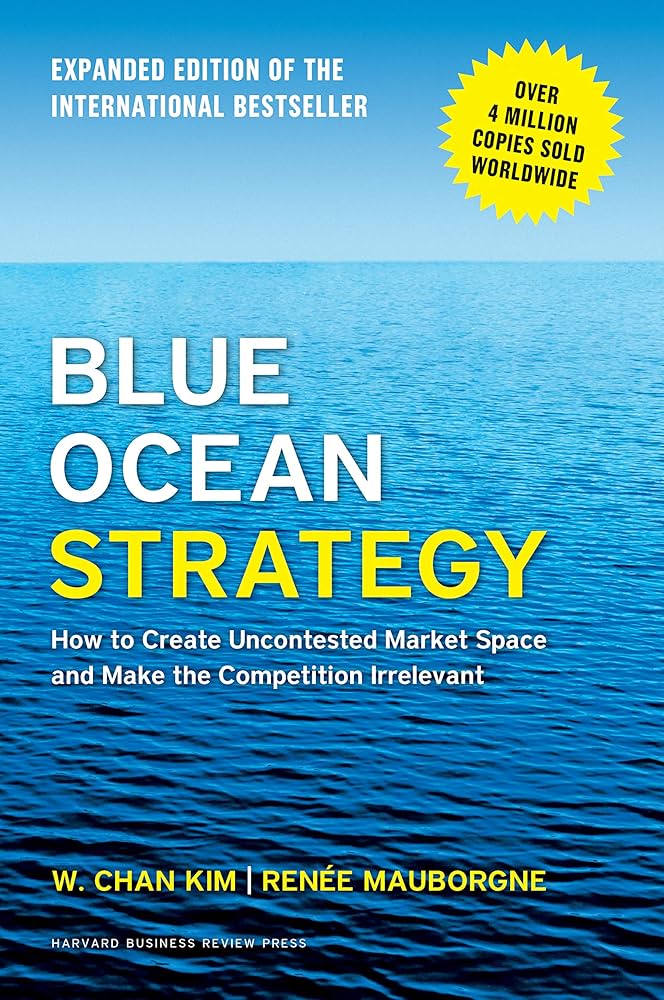
BLUE OCEAN STRATEY: How to Create Uncontested Market Space and Make Competition Irrelevant


"Blue Ocean Strategy: How to Create Uncontested Market Space and Make Competition Irrelevant" is a book written by W. Chan Kim and Renée Mauborgne. The book introduces a strategic framework for businesses to break free from competition and create new, uncontested market spaces. Here's a summary of the key themes and concepts from "Blue Ocean Strategy":

  1. Red Ocean vs. Blue Ocean: The authors introduce the concept of the "red ocean," which represents existing markets saturated with competition, leading to cutthroat rivalry and declining profits. In contrast, a "blue ocean" represents new market spaces that are uncontested and offer opportunities for innovation and growth.

  2. Value Innovation: The core of blue ocean strategy is value innovation, which involves simultaneously pursuing differentiation and lower costs. This allows companies to create a unique value proposition that attracts customers while reducing the need for price-based competition.

  3. The Six Paths Framework: The book presents the Six Paths Framework, a tool for identifying opportunities to create blue oceans. These paths include looking across industries, looking within industries, redefining customer groups, redefining the scope of products or services, redefining the functional-emotional orientation, and time-based innovation.

  4. Eliminate-Reduce-Raise-Create Grid: To formulate a blue ocean strategy, the authors provide a practical tool called the Eliminate-Reduce-Raise-Create (ERRC) Grid. It helps companies identify factors to eliminate, reduce, raise, or create to shift from red to blue ocean thinking.

  5. Value Curve: A value curve visually represents a company's value proposition compared to competitors. Blue ocean strategy encourages companies to rethink their value curves to stand out from the competition by offering distinctive value elements.

  6. The Four Actions Framework: The Four Actions Framework challenges companies to ask four key questions: What factors should be eliminated? What factors should be reduced below industry standards? What factors should be raised above industry standards? What factors should be created that the industry has never offered?

  7. Case Studies: Throughout the book, the authors provide numerous real-world case studies to illustrate the principles of blue ocean strategy. These examples span various industries and demonstrate how companies have successfully created new market spaces.

  8. Execution and Risk Mitigation: While blue ocean strategy offers a powerful framework for innovation, the authors also emphasize the importance of effective execution. They provide guidance on overcoming implementation challenges and mitigating risks associated with pursuing a blue ocean strategy.

  9. Continuous Innovation: Blue ocean strategy isn't a one-time effort; it's a continuous process of seeking new opportunities and staying ahead of the competition. The book encourages companies to make blue ocean strategy an integral part of their organizational culture.

In summary, "Blue Ocean Strategy" offers a groundbreaking approach to business strategy by encouraging companies to break free from competition and create new, uncontested market spaces. By focusing on value innovation, redefining market boundaries, and using practical tools like the ERRC Grid and the Four Actions Framework, businesses can discover untapped opportunities for growth and differentiation. The book's case studies and actionable insights make it a valuable resource for leaders and strategists seeking to transform their industries and achieve sustainable success


HOW TO TALK TO ANYONE: 92 Little Tricks for Big Success in Relationships


"How to Talk to Anyone: 92 Little Tricks for Big Success in Relationships" is a self-help book written by Leil Lowndes. The book offers practical tips and strategies for improving your communication skills and building better relationships with people. Here's a summary of the key themes and lessons from "How to Talk to Anyone":

  1. The Power of First Impressions: The book emphasizes the importance of making a positive first impression. It provides advice on how to approach and greet people confidently and warmly, setting the stage for successful interactions.

  2. Building Rapport: Lowndes discusses the concept of mirroring, where you subtly match the body language, tone of voice, and energy level of the person you're speaking with. This helps create a sense of rapport and connection.

  3. Conversation Starters: The book offers various conversation starters and icebreakers to initiate conversations with strangers or acquaintances. These tips can help you feel more comfortable and confident in social situations.

  4. Listening Skills: Effective listening is a key component of good communication. Lowndes provides guidance on active listening techniques and strategies for showing genuine interest in what others have to say.

  5. Body Language and Nonverbal Communication: The book delves into the importance of nonverbal communication, such as eye contact, facial expressions, and gestures. It provides insights into how to use body language to convey confidence and warmth.

  6. Compliments and Praise: Lowndes offers advice on how to give sincere compliments and praise to others, making them feel valued and appreciated.

  7. Remembering Names: The book provides techniques for remembering people's names, which can be a powerful way to make a positive impression and strengthen relationships.

  8. Handling Difficult People: Lowndes offers strategies for dealing with difficult or challenging individuals, such as how to remain calm, defuse tension, and navigate conflicts.

  9. Networking and Social Events: The book provides tips for networking effectively at social events, parties, and gatherings. It offers guidance on how to approach strangers, start conversations, and leave a lasting impression.

  10. Confidence and Self-Presentation: Lowndes emphasizes the importance of confidence in social interactions. She offers tips on how to project confidence through your words, actions, and demeanor.

  11. Cultural Sensitivity: The book acknowledges the importance of cultural awareness and sensitivity when communicating with individuals from diverse backgrounds. It provides tips on how to navigate cultural differences gracefully.

  12. Relationship Building: Lowndes discusses the art of deepening relationships over time by maintaining regular contact, showing genuine interest, and being a good listener.

In summary, "How to Talk to Anyone" offers a wide range of practical tips and techniques for improving your communication skills and building better relationships with people in various social and professional settings. Whether you're looking to enhance your networking abilities, make a memorable impression, or navigate challenging conversations, this book provides valuable insights and strategies to help you succeed in your interpersonal interactions.

HOW TO GET RICH: One of the World's Greatest Entrepreneurs Shares His Secrets


"How to Get Rich: One of the World's Greatest Entrepreneurs Shares His Secrets" is a book written by entrepreneur and business magnate Felix Dennis. In this book, Dennis shares his insights and experiences on achieving wealth and success. Here's a summary of the key themes and lessons from "How to Get Rich":

  1. Entrepreneurial Mindset: Felix Dennis emphasizes the importance of having an entrepreneurial mindset and taking calculated risks. He believes that true wealth comes from creating and owning businesses, rather than simply working for a paycheck.

  2. Passion and Persistence: Dennis stresses that genuine passion for your chosen field is crucial for success. He encourages readers to pursue their interests and stick with them through thick and thin, even in the face of setbacks and failures.

  3. Starting a Business: The book provides practical advice on starting and running a successful business. Dennis discusses the importance of identifying a niche, providing value to customers, and being relentless in your pursuit of excellence.

  4. Investing in Yourself: Dennis believes in investing in your own skills and knowledge. He advises readers to continually improve themselves, whether through education, training, or personal development.

  5. Avoiding Debt: The book cautions against accumulating excessive debt, as it can hinder financial freedom and limit opportunities. Dennis recommends living within your means and avoiding unnecessary expenditures.

  6. Building Wealth Slowly: Dennis advocates for patience in building wealth. He suggests that while there may be shortcuts to riches, the surest path is often a slow and steady one.

  7. Risk Management: While Dennis encourages taking risks, he also emphasizes the importance of managing and mitigating those risks. He advises against reckless behavior and advocates for thoughtful decision-making.

  8. Money Management: The book provides insights into managing money wisely, including advice on saving, investing, and protecting your wealth.

  9. Networking and Relationships: Dennis discusses the value of building and nurturing relationships in business. He highlights the importance of networking and leveraging your connections to create opportunities.

  10. Maintaining Perspective: Throughout the book, Dennis reminds readers that money, while important, is not the only measure of success or happiness. He encourages a balanced approach to life and work.

  11. The Role of Luck: Dennis acknowledges that luck can play a role in success, but he also believes that individuals can create their own opportunities through hard work and determination.

  12. Learning from Mistakes: The book emphasizes that mistakes and failures are part of the journey to wealth. Dennis encourages readers to learn from their errors and keep moving forward.

In summary, "How to Get Rich" by Felix Dennis offers a candid and practical perspective on achieving wealth and success. While it provides insights into the entrepreneurial mindset and the strategies for building wealth, it also reminds readers that true success encompasses more than just financial prosperity. Dennis's personal experiences and anecdotes provide valuable lessons for aspiring entrepreneurs and anyone interested in the pursuit of wealth and achievement.

THE LAWS OF HUMAN NATURE


"The Laws of Human Nature" is a book written by Robert Greene, an author known for his works on power, strategy, and human behavior. In this book, Greene explores various aspects of human nature, drawing from psychology, philosophy, and history to offer insights and strategies for understanding and influencing human behavior. Here's a summary of the key themes and lessons from "The Laws of Human Nature":

  1. Understanding Human Nature: Greene argues that understanding the nature of people is essential for personal and professional success. He delves into human psychology, revealing our deep-seated motives, desires, and insecurities.

  2. Mastery of Self: Greene emphasizes the importance of self-awareness and self-mastery. He suggests that by recognizing our own emotional and irrational tendencies, we can gain better control over our actions and decisions.

  3. The Shadow: Greene introduces the concept of the "shadow," which represents the darker and hidden aspects of our personality. He argues that acknowledging and integrating these hidden elements can lead to personal growth and improved relationships.

  4. The Law of Covetousness: Greene discusses the powerful role of envy and desire in human behavior. He provides strategies for recognizing and dealing with envy, both in ourselves and in others.

  5. The Law of Shortsightedness: Greene explores the idea that people often act in ways that prioritize short-term gains over long-term benefits. He offers strategies for overcoming this tendency and making more rational decisions.

  6. The Law of Coversion: Greene introduces the concept of "coversion," which involves understanding and influencing the desires and needs of others. He provides techniques for connecting with people on a deep emotional level and influencing their behavior.

  7. The Law of Generational Myopia: Greene discusses how generational experiences and attitudes shape our behavior. He encourages readers to consider historical and generational influences when trying to understand people's actions.

  8. The Law of Death Denial: Greene explores our deep-seated fear of death and how it impacts our behavior. He suggests that confronting our mortality can lead to a greater appreciation of life and more meaningful decisions.

  9. The Law of Compulsive Behavior: Greene discusses the role of compulsive behavior and addiction in human nature. He offers insights into how to break free from destructive habits and addictions.

  10. Social Intelligence: Throughout the book, Greene emphasizes the importance of social intelligence—our ability to navigate social situations, understand people's motivations, and build meaningful connections.

  11. Practical Strategies: "The Laws of Human Nature" provides practical strategies and exercises for applying the principles discussed in real-life situations. Greene offers advice on improving communication, building trust, and handling conflicts.

In summary, "The Laws of Human Nature" is a comprehensive exploration of human behavior and psychology, offering valuable insights into why people act the way they do and how we can better understand and influence others. Greene's book provides a blend of psychological research, historical examples, and practical advice to help readers improve their personal and professional relationships, make wiser decisions, and lead a more fulfilling life.


ZERO TO ONE : Notes on Startups


"Zero to One: Notes on Startups, or How to Build the Future" is a book written by entrepreneur and investor Peter Thiel. In this book, Thiel explores his views on innovation, entrepreneurship, and the process of creating a successful startup. Here is a summary of the key points and ideas from "Zero to One":

  1. The Zero to One Mindset: Thiel's central thesis is that going from "zero to one" represents the creation of something entirely new, whereas going from "one to n" represents replication or scaling of existing ideas. He emphasizes the value of creating unique, innovative businesses and technologies that disrupt existing markets.

  2. Monopoly as a Goal: Thiel argues that successful startups should aim to create a monopoly in their market. Monopolies, he contends, allow companies to dominate and extract value from their industries. He suggests that competition can be destructive and that monopolistic businesses can provide better products and services.

  3. Technology and Innovation: The book stresses the importance of technological innovation as a driver of progress. Thiel encourages entrepreneurs to focus on creating breakthrough technologies that solve important problems and change the world.

  4. Vertical Progress vs. Horizontal Progress: Thiel distinguishes between vertical progress (making new things) and horizontal progress (copying or improving existing things). He argues that vertical progress is more valuable and leads to significant advancements.

  5. Start Small and Dominate: Thiel advises startups to begin with a small, niche market and dominate it before expanding. He emphasizes the value of achieving a strong market position in a targeted area.

  6. Founders and Visionaries: Thiel places great importance on the role of visionary founders in driving innovation. He suggests that startups need passionate leaders who are committed to their unique vision.

  7. The Importance of Secrets: Thiel believes that valuable startups are often built on unique insights or "secrets" that are not widely known. These insights can be technological, operational, or market-related and give startups a competitive edge.

  8. Competition and Monopoly: Thiel challenges the idea that competition is always healthy and encourages entrepreneurs to seek monopoly positions. He argues that monopolies can lead to higher profits and greater innovation.

  9. Distribution and Sales: The book discusses the importance of distribution and sales as crucial aspects of a successful startup. Even the best product won't succeed without an effective strategy for reaching customers.

  10. The Future of Innovation: Thiel provides his perspective on various industries, including technology, education, and healthcare, and offers insights into where he believes innovation will have the most impact.

"Zero to One" is a thought-provoking book that challenges conventional wisdom about entrepreneurship and innovation. It encourages readers to think critically about the nature of progress and the strategies for building successful startups. Thiel's ideas have sparked debate and discussion in the business and technology communities, making the book a valuable read for aspiring entrepreneurs and anyone interested in the future of innovation

HOW TO WIN FRIENDS AND INFLUENCE PEOPLE


"How to Win Friends and Influence People" is a self-help book written by Dale Carnegie, first published in 1936. It remains one of the most influential and popular books in the self-improvement genre. The book offers a wealth of advice on interpersonal relationships, communication, and influencing others positively. Here are some key lessons from the book:

  1. Show Genuine Interest in Others:

    • Carnegie emphasizes the importance of taking a sincere interest in other people. Ask questions, listen actively, and show empathy to make others feel valued.
  2. Smile and Be a Good Listener:

    • A warm smile is one of the most powerful tools for creating a positive impression. Being a good listener and showing that you genuinely care about what others are saying can deepen your connections.
  3. Remember People's Names:

    • A person's name is, to that person, the sweetest sound in any language. Remembering and using someone's name in conversation helps build rapport and connection.
  4. Avoid Criticizing, Condemning, or Complaining:

    • Carnegie advises against criticizing others, as it tends to put people on the defensive. Instead, provide constructive feedback and focus on solutions.
  5. Give Honest and Sincere Appreciation:

    • Praise and appreciation should be genuine and specific. Recognizing others for their efforts and achievements fosters goodwill and motivation.
  6. Arouse an Eager Want:

    • To influence others, focus on what they want and how your ideas or proposals align with their desires and goals. Show how your suggestions benefit them.
  7. Let Others Feel That the Idea Is Theirs:

    • People are more likely to support ideas they feel ownership of. Encourage others to share their thoughts and viewpoints, and build upon their suggestions.
  8. Talk in Terms of the Other Person's Interests:

    • Tailor your conversations to align with the interests, needs, and priorities of the person you're speaking with. This makes your message more relevant and engaging.
  9. Avoid Arguments:

    • Arguing rarely leads to productive outcomes. Instead, seek common ground and try to understand the other person's perspective. Agree where possible and avoid unnecessary disputes.
  10. Let the Other Person Feel That the Idea Is His or Hers:

    • Encourage others to take ownership of ideas and decisions. When they feel a sense of ownership, they are more likely to be committed and enthusiastic.
  11. Be Sympathetic to the Other Person's Ideas and Desires:

    • Acknowledge and respect the opinions and desires of others, even if you don't agree with them. Show empathy and understanding.
  12. Begin in a Friendly Way:

    • Start conversations and interactions on a positive and friendly note. This sets a constructive tone and helps build rapport.
  13. Get the Other Person Saying "Yes, Yes" Immediately:

    • Seek initial agreement on small points or questions to establish a pattern of agreement. It can make it easier to gain acceptance for larger requests later.
  14. Let the Other Person Do Most of the Talking:

    • Allow the other person to express themselves and share their thoughts. This not only shows respect but also provides valuable insights.
  15. Talk About Your Own Mistakes Before Criticizing the Other Person:

    • Admitting your own mistakes and vulnerabilities can make you more relatable and less judgmental when providing feedback or addressing issues.
  16. Encourage Others to Talk About Themselves:

    • People enjoy talking about themselves and their experiences. Encourage them to do so by asking open-ended questions and showing genuine curiosity.
  17. Let the Other Person Feel Important:

    • Everyone has a desire to feel important and appreciated. Acknowledge the significance of others' contributions and make them feel valued.
These timeless principles from "How to Win Friends and Influence People" emphasize the importance of empathy, effective communication, and building positive relationships. They are applicable in various aspects of life, from personal relationships to professional interactions, and they can help individuals become more influential and successful in their dealings with others

THE INTELLIGENCE TRAP why smart people do stupid things and how to make wise decisions


"The Intelligence Trap: Why Smart People Make Dumb Mistakes" is a book by David Robson that explores the paradox of intelligent people making poor decisions. The book delves into the psychological factors that can lead smart individuals to fall into cognitive traps and make errors in judgment. Here's a summary of some key points from "The Intelligence Trap":

  1. Cognitive Biases: The book discusses how even highly intelligent individuals can fall victim to various cognitive biases, such as confirmation bias, overconfidence, and the Dunning-Kruger effect. These biases can lead them to make faulty decisions and underestimate their own limitations.

  2. The Curse of Knowledge: Robson explores how experts often struggle to communicate complex ideas to non-experts because they have difficulty understanding what it's like not to know what they know. This "curse of knowledge" can hinder effective communication and decision-making.

  3. Emotional Intelligence: While traditional intelligence (IQ) is important, the book highlights the significance of emotional intelligence (EQ) in decision-making. EQ helps individuals manage their emotions, empathize with others, and make better choices in social and emotional situations.

  4. Growth Mindset: "The Intelligence Trap" promotes the idea of cultivating a growth mindset, which involves being open to learning, embracing failure as an opportunity for growth, and seeking feedback. This mindset can help individuals overcome cognitive biases and improve decision-making.

  5. The Role of Education: The book discusses the limitations of traditional education systems that focus primarily on IQ and standardized testing. It suggests that education should place more emphasis on critical thinking, emotional intelligence, and metacognition (thinking about thinking).

  6. Self-Reflection and Metacognition: Robson encourages readers to engage in self-reflection and metacognition to become more aware of their thought processes and cognitive biases. By understanding how the mind works, individuals can make more informed decisions.

  7. Learning from Mistakes: The book highlights the importance of learning from mistakes and using them as opportunities for personal growth and improvement. It argues that fear of failure can hinder progress and innovation.

  8. Effective Decision-Making Strategies: "The Intelligence Trap" offers practical strategies for making better decisions, including seeking diverse perspectives, using the "premortem" technique to anticipate potential problems, and practicing mindfulness to enhance self-awareness.

  9. Cultural and Historical Factors: The book explores how cultural and historical factors can influence intelligence and decision-making. It provides examples from history to illustrate how even brilliant individuals have made significant errors in judgment.

  10. The Value of Humility: Humility is presented as a valuable trait in decision-making. Acknowledging one's own limitations and being open to the input of others can lead to wiser choices.

In summary, "The Intelligence Trap" by David Robson delves into the complex interplay of intelligence, cognitive biases, emotional intelligence, and self-awareness in decision-making. It emphasizes the importance of a growth mindset, self-reflection, and humility in overcoming the traps that can lead even highly intelligent individuals to make poor decisions. The book serves as a guide for readers to enhance their decision-making abilities and avoid common cognitive pitfalls.

© all rights reserved
made with by templateszoo